Water Treatment Valves & Flow Control in Egypt
Desalination, municipal water, wastewater and cooling water
Water treatment facilities require corrosion-resistant materials, precise flow control, and reliable isolation equipment.

How we support Water Treatment in Egypt
What ACTS actually does on a water treatment plant, and which manufacturer sits behind each capability.
Isolation valves (ball, butterfly) for on/off and flow isolation services
Dyna-Flo Control Valve ServicesPressure regulators and instrumentation for chemical dosing systems
Dyna-Flo Control Valve ServicesHeat exchanger maintenance for plate-and-frame and shell-and-tube exchangers used in cooling and heating circuits
ESTBackflow prevention and check valves for pipeline protection
Sizing and selection support for corrosive and erosive media
Continuous oil-in-water, turbidity and organic-carbon measurement, from produced water and effluent through to purified and ultrapure water
Blue Dragon TechnologyKey Applications
Where Water Treatment work actually happens
Process area by process area: the engineering challenge, how we solve it, why that approach is the right one, and the exact product line behind the claim.
Desalination
SWRO/MSF/MED: pretreatment control, high-pressure brine handling, and chemical dosing
- The challenge
- Reverse-osmosis trains run at genuinely high pressure with a brine stream that's both saline and, at the pretreatment stage, dosed with corrosive chemicals. Trim and seats wear fast if the valve isn't built for it.
- Our solution
- Dyna-Flo's segmented and full-ball rotary valves throttle and isolate pretreatment and brine lines with corrosion-resistant trim, while PRO-50 and 4000 Series instrumentation regulates the chemical-dosing skids.
- Why it works
- A segmented ball design gives tight shutoff and high rangeability in one body, so one valve does both throttling and positive isolation instead of needing separate control and block valves.
Municipal water
intake control, filtration, disinfection, and distribution network isolation
- The challenge
- A municipal network has to keep flowing continuously to the city it serves. An isolation valve that won't seat, or a control valve that hunts instead of holding position, shows up directly as a service complaint.
- Our solution
- Farris Series 1890 protects treatment-plant pressure vessels and filtration skids against overpressure, while Dyna-Flo rotary and sliding-stem valves handle intake and distribution control.
- Why it works
- Direct-spring relief needs no external power or air supply. For a treatment plant built to run unattended for long stretches, that's one less system that can fail silently.

Industrial wastewater
neutralization, clarification, sludge handling, and effluent discharge
- The challenge
- Neutralization and sludge streams are abrasive, corrosive, or both. Standard trim erodes quickly, and a valve failure here risks an out-of-spec discharge.
- Our solution
- Dyna-Flo Series 570/590 rotary valves, available in corrosion-resistant trim, handle neutralization and sludge isolation, while EST's Pop-A-Plug keeps any shell-and-tube exchangers in the treatment train sealed.
- Why it works
- Rotary ball/segmented trim wears more evenly under abrasive slurry than a sliding-stem globe valve's throttling edge, extending service life on exactly the streams that chew through standard valves fastest.
Cooling water systems
heat exchanger protection, biocides dosing, and condenser tube maintenance
- The challenge
- Cooling water fouls and scales heat exchangers over time, cutting thermal performance long before a leak is even detectable. By the time it's obvious, efficiency has already been lost for weeks.
- Our solution
- EST Pop-A-Plug seals a fouled or leaking tube without a full retube, and Dyna-Flo instrumentation doses biocide accurately to slow fouling in the first place.
- Why it works
- Catching and plugging a single failing tube costs a fraction of an unplanned exchanger retube, and it's done without draining the system.
Discharge & process-water monitoring
produced-water and refinery effluent, clarifier and filter performance, and purified-water release
- The challenge
- Water quality is enforced on numbers (oil in water, organic carbon, turbidity), and a plant that samples for them once a shift finds out about an excursion after it has already been discharged. Optical instruments left in the stream to close that gap foul within days.
- Our solution
- Blue Dragon's C610OIW tracks oil-in-water continuously by UV fluorescence and the C620TUR reads turbidity to 4000 NTU, both on self-wiping immersion sensors, with the C680 and U1600 analyzers covering organic carbon from wastewater through to purified water in the laboratory.
- Why it works
- The wiper is the whole difference between an optical sensor that trends and one that drifts: it clears the window every thirty minutes, so the reading stays the water's and not the film growing on the glass.
What we supply into Water Treatment
Every line named above, and its manufacturer literature
Each line opens onto what it specifically does in Water Treatment, its product page, and its brochures, catalogs and installation manuals.
 Rotary valves (segmented & full ball)SERIES 570 / 590
 InstrumentationPRO-50 · 4000 · 5000 · T950XP · PS2/760
 Direct spring-operated, threadedSERIES 1890
 Direct spring-operated, flanged/threadedSERIES 2600 / 2700
 Mechanical tube pluggingPOP-A-PLUG®
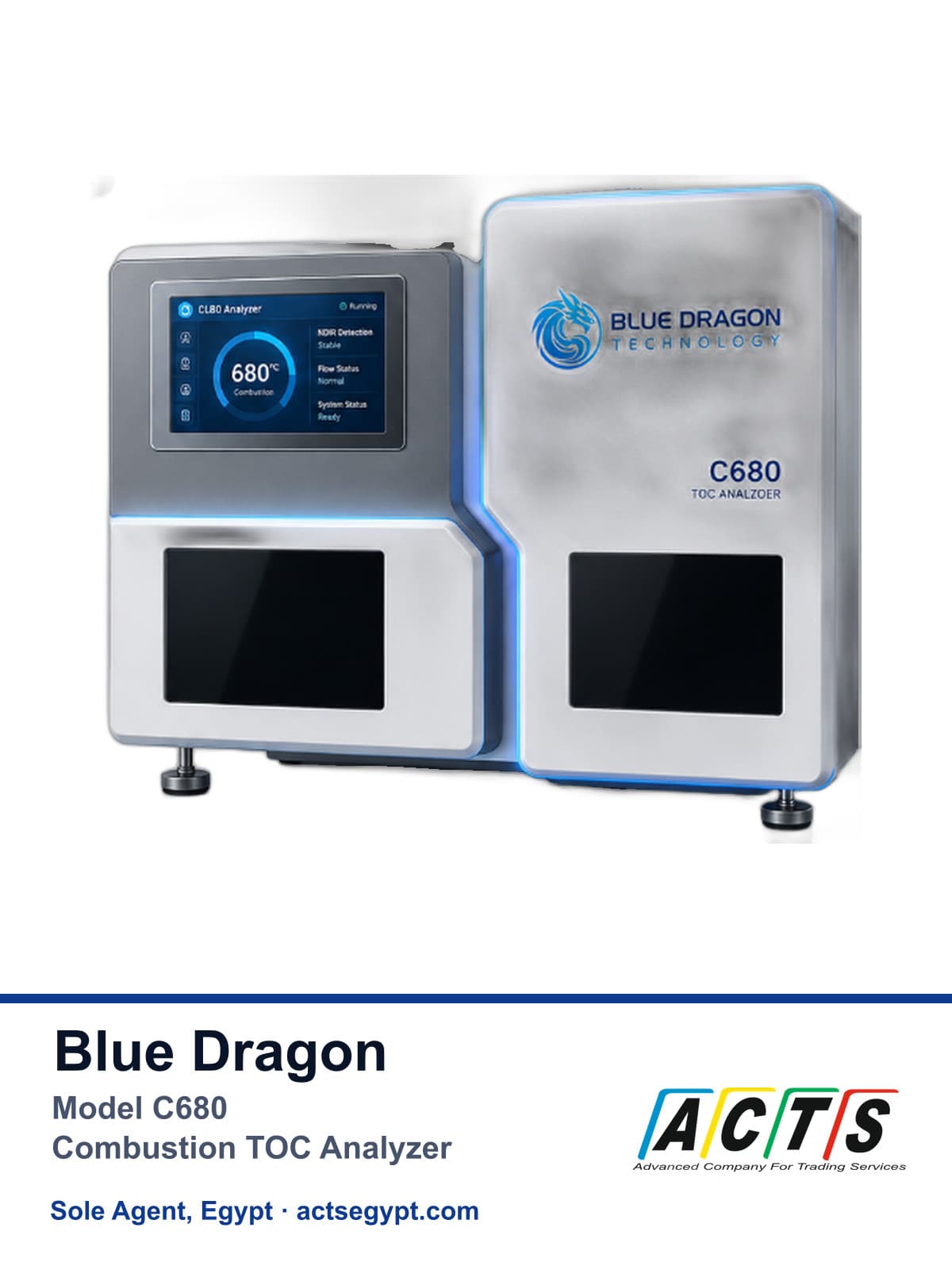 Water quality & organic carbonC680 · C610OIW · C620TUR · U1600
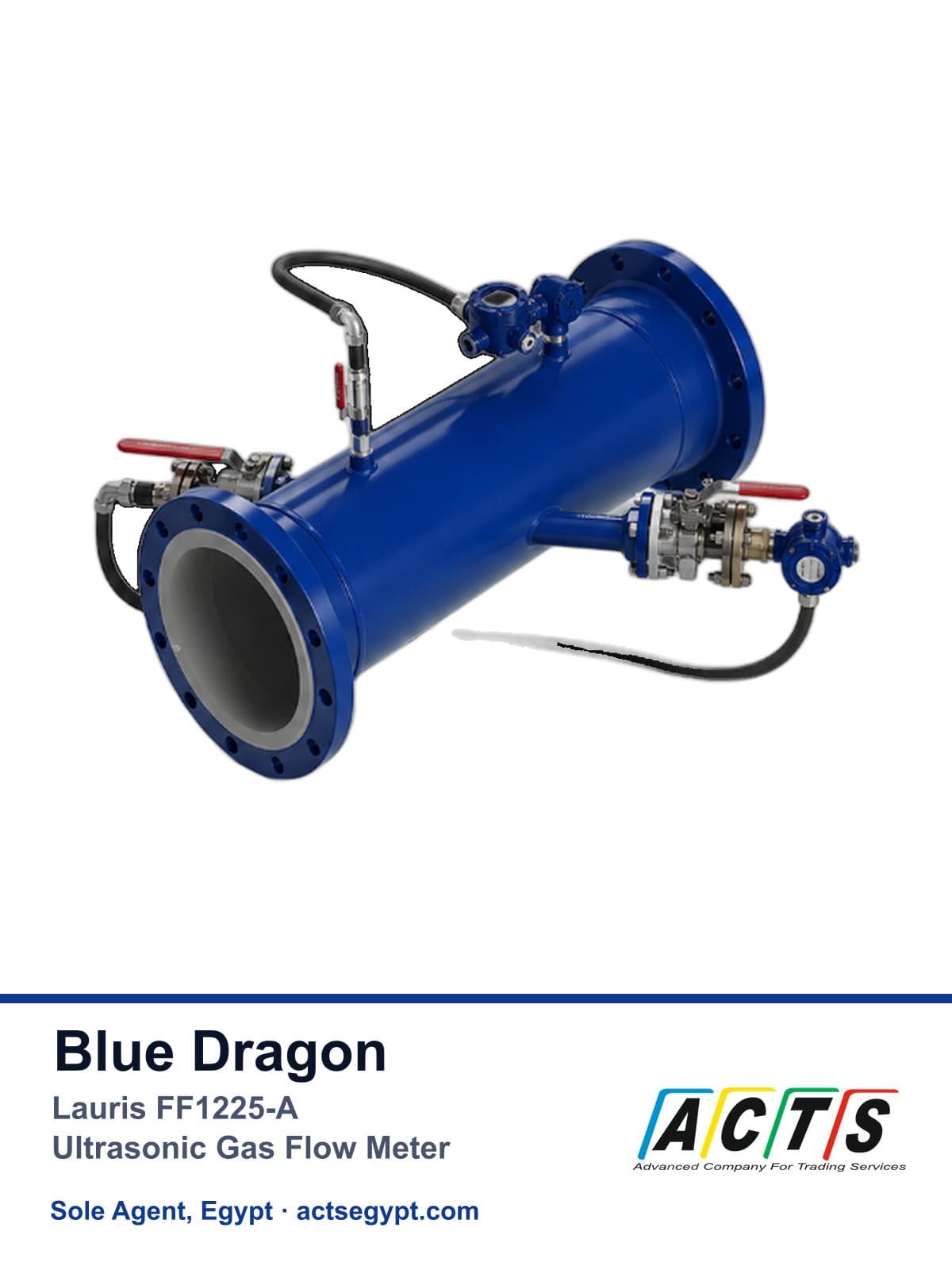 Ultrasonic gas flow metersLAURIS FF1225 / FF2225
01Dyna-Flo Control Valve ServicesSERIES 570 / 590Rotary valves (segmented & full ball)In catalog
Segmented / full-ball rotary control valve - Role in Water Treatment
- Segmented and full-ball rotary valves for pretreatment and brine-line throttling and isolation, in corrosion-resistant trim built for saline and chemically dosed streams.
- The line
- High-flow, throttling or on/off service.
Covered in these catalogs
No sheet of its own in the library; this line is covered inside the brand overview.
02Dyna-Flo Control Valve ServicesPRO-50 · 4000 · 5000 · T950XP · PS2/760Instrumentation9PDFs
4000 Series local pressure controller - Role in Water Treatment
- Instrumentation regulating chemical-dosing skids with the accuracy a treatment process's compliance limits demand.
- The line
- Pressure/level control, I/P transducers, positioners.
Documents
8 of 9View all 9 in the document library- 760 BrochurePDFBrochures
- PS2 BrochurePDFBrochures
- 4000 BulletinPDFProduct Bulletins
- 5000 BulletinPDFProduct Bulletins
- PRO-50 BulletinPDFProduct Bulletins
- 4000 InstructionsPDFInstruction Manuals
- 5000 Displacer InstallPDFInstruction Manuals
- 5000 InstructionsPDFInstruction Manuals
03Farris EngineeringSERIES 1890Direct spring-operated, threaded1PDF
Direct spring-operated safety relief valve - Role in Water Treatment
- General overpressure protection for treatment-plant pressure vessels and filtration skids, using a direct-spring design that needs no external power, which matters on a plant built to run unattended.
- The line
- ASME Section VIII, rated to 800 psig: air, steam & liquid service.
Documents
04Farris EngineeringSERIES 2600 / 2700Direct spring-operated, flanged/threaded4PDFs
Flanged valve with full-length test lever - Role in Water Treatment
- Flanged relief rated for water service specifically, protecting distribution and intake pressure systems at the flow rates a municipal or industrial network runs.
- The line
- ASME/NB-certified: air, steam, water.
Documents
05ESTPOP-A-PLUG®Mechanical tube plugging23PDFs
Pop-A-Plug CPI / Perma tube plugs - Role in Water Treatment
- Seals a fouled or leaking heat exchanger tube in the cooling-water circuit without draining the system.
- The line
- Weld-free sealing of leaking heat exchanger, condenser & boiler tubes, rated to 7,000 psi.
Documents
8 of 23View all 23 in the document library- Literature Manual Tool Pop-A-PlugPDFMarketing LiteratureMK0011
- Pop-A-Plug ACHE Tech BriefPDFMarketing LiteratureMK0014
- Pop-A-Plug CPI Perma Plug LiteraturePDFMarketing LiteratureMK0003
- Pop-A-Plug CPI Perma Tube Plug Tech BriefPDFMarketing LiteratureMK0004
- Pop-A-Plug Fertilizer Market LiteraturePDFMarketing LiteratureMK0022
- Pop-A-Plug P2-LiteraturePDFMarketing LiteratureMK0005
- Pop-A-Plug P2-Technical BriefPDFMarketing LiteratureMK0006
- Pop-A-Plug TA LUFT CertificatePDFCertifications & Reports
06Blue Dragon TechnologyC680 · C610OIW · C620TUR · U1600Water quality & organic carbon11PDFs
Model C680 combustion TOC analyzer - Role in Water Treatment
- The whole water-quality range: C610OIW oil-in-water, C620TUR turbidity, and the C680 and U1600 analyzers for organic carbon from wastewater to ultrapure water.
- The line
- TOC, oil-in-water and turbidity for process, waste and high-purity water.
Documents
8 of 11View all 11 in the document library- Model C680 High Temperature Combustion TOC Analyzer BrochurePDFBrochures
- Model C610OIW Online Oil in Water Analyzer Product SheetPDFProduct Sheets
- Model C610OIW Operation Installation Maintenance ManualPDFOperation & Maintenance Manuals
- Model C620TUR Online Turbidity Analyzer Product SheetPDFProduct Sheets
- Model C620TUR Operation Installation Maintenance ManualPDFOperation & Maintenance Manuals
- Model C680 High Temperature Combustion TOC Analyzer Product SheetPDFProduct Sheets
- Model C680 Operation Installation Maintenance ManualPDFOperation & Maintenance Manuals
- Model U1600-L Laboratory TOC Analyzer Product SheetPDFProduct Sheets
07Blue Dragon TechnologyLAURIS FF1225 / FF2225Ultrasonic gas flow meters5PDFs
Lauris FF1225-A single-path inline ultrasonic flow meter - Role in Water Treatment
- Ultrasonic metering for biogas and digester gas on wastewater sites, unaffected by the wet, dirty gas those streams carry.
- The line
- Inline and insertion transit-time meters for flare, vent and process gas.
Documents
- Lauris FF1225-A Single Path Inline Ultrasonic Gas Flow Meter Product SheetPDFProduct Sheets
- Lauris FF1225-G Vertical Port Insertion Ultrasonic Gas Flow Meter Product SheetPDFProduct Sheets
- Lauris FF1225-U Single Port Insertion Ultrasonic Gas Flow Meter Product SheetPDFProduct Sheets
- Lauris FF1225-XT Extreme Temperature Ultrasonic Gas Flow Meter Product SheetPDFProduct Sheets
- Lauris FF2225-A Dual Path Inline Ultrasonic Gas Flow Meter Product SheetPDFProduct Sheets
Brands behind our Water Treatment work
ACTS is Egypt's sole agent for Dyna-Flo (Curtiss-Wright) control valves: sliding-stem, rotary ball and DF400 eccentric plug, plus actuators and positioners.
ACTS is Egypt's sole agent for Farris Engineering (Curtiss-Wright) safety relief valves: API 526 process PRVs, steam safety valves and iNSURE® monitoring.
ACTS is Egypt's sole agent for EST Group (Curtiss-Wright): Pop-A-Plug® tube plugging, Hydra-Loc® sleeving and GripTight® hydrostatic test and isolation plugs.
ACTS is Blue Dragon Technology's exclusive agent in Egypt: sulfur and H₂S analyzers, moisture & dew point, TOC and oil-in-water, XRF, temperature and gas flow.
Other industries we serve in Egypt
Sourcing for a Water Treatment project?
Sized, quoted, and answered by an engineer
Send us the service conditions and one of our application engineers will follow up, typically within 24 hours.